






 CLOUD
CLOUD
CLOUD
CLOUD

CLOUD

Cloud-native strategies and technologies are accelerating the evolution of artificial intelligence, empowering businesses to deploy solutions at scale while keeping control over their infrastructure and data sovereignty.
Industries from telecom to finance are turning to cloud native solutions to balance performance, flexibility and compliance. In Europe, companies use these frameworks to meet regulations and prepare for AI scale, yet adoption remains limited. Many are still experimenting, holding resources without deploying at scale. Open-source collaboration is key to shifting from cautious trials to broader use, according to Brian Douglas (pictured), head of ecosystem at the Cloud Native Computing Foundation.
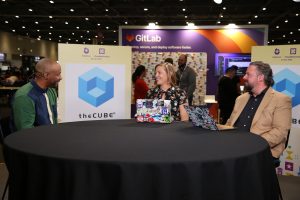
The CNCF’s Brian Douglas talks to theCUBE about cloud-native strategies.
“Trends we’re seeing right now is very popular here in the EU with telcos,” Douglas said. “They’ve been around for years, but now they’re getting on cloud native technologies and really just adopting it with the new NeoNephos Foundation. Obviously, AIs, it’s big — it’s a verb, it’s a noun, it’s an adjective. It’s all out there as well. Then, with the EU, like data sovereignty … being cloud native helps you [know] where your data is going to be or your user’s data is going to be.”
Douglas spoke with theCUBE’s Savannah Peterson and Rob Strechay at KubeCon + CloudNativeCon Europe, during an exclusive broadcast on theCUBE, SiliconANGLE Media’s livestreaming studio. They discussed how cloud native technologies are enabling scalable, production-ready AI while exploring challenges in adoption, tooling and community collaboration. (* Disclosure below.)
Even with the growing interest in cloud-native solutions, many organizations are not yet fully leveraging their AI capabilities. Companies are reserving GPUs and experimenting with AI tooling, but actual implementation remains minimal. The need for better tools, integrated partner ecosystems and clearer pathways to production is evident across conversations in the community. Developers and enterprises alike are pushing for environments that are more intuitive and scalable, aiming to transform prototypes into production-ready solutions, according to Douglas.
“What we’re going to see route as a trend of more controls. You can now leverage some of the big hyperscalers and big clouds to go ship and deploy your own solutions,” he explained. “Again, low usage for GPUs at the moment. We need to get more tooling in the partner tool chain to be able to be cloud-ready.”
The gap between aspiration and execution was highlighted during a recent panel session, where only a small number of participants reported actively training AI models. While many organizations are stockpiling GPUs in anticipation of future deployments, actual hands-on usage remains limited. This points to a clear opportunity for more education, shared success stories and practical demonstrations of AI in action within cloud-native environments.
“What we’re seeing right now is a lot of folks are using your GitHub and your Cursors or Windsurf that test the waters. And you get to a certain extent of, yes, it works, but am I going to use this in my behind the firewall for my engineers? Maybe yes or no, it’s up for a debate,” Douglas said.
Success stories such as those of the Ant Group and GitHub show the potential of AI and cloud-native strategies working together. The community needs more of these examples to inspire confidence and accelerate adoption, Douglas stressed. Sharing how different tools and technologies come together in real-world applications can provide valuable playbooks for others to follow. These shared experiences will help the ecosystem mature and support the next wave of cloud native AI deployments.
“We’ve got over 200 projects within the CNCF. If using 10 of those, there’s a story of how you compiled those and made that work to be AI native and AI ready,” Douglas said. “That’s a story that we should really start getting out there and I think we’re ready for that.”
Here’s the complete video interview, part of SiliconANGLE’s and theCUBE’s coverage of KubeCon + CloudNativeCon Europe:
(* Disclosure: The Cloud Native Computing Foundation sponsored this segment of theCUBE. Neither the CNCF nor other sponsors have editorial control over content on theCUBE or SiliconANGLE.)
Support our mission to keep content open and free by engaging with theCUBE community. Join theCUBE’s Alumni Trust Network, where technology leaders connect, share intelligence and create opportunities.
Founded by tech visionaries John Furrier and Dave Vellante, SiliconANGLE Media has built a dynamic ecosystem of industry-leading digital media brands that reach 15+ million elite tech professionals. Our new proprietary theCUBE AI Video Cloud is breaking ground in audience interaction, leveraging theCUBEai.com neural network to help technology companies make data-driven decisions and stay at the forefront of industry conversations.