




 AI
AI
AI
AI

AI

Financial services teams are starting to test agentic artificial intelligence in targeted workflows. Underpinning these experiments are application programming interfaces, bringing API governance into focus.
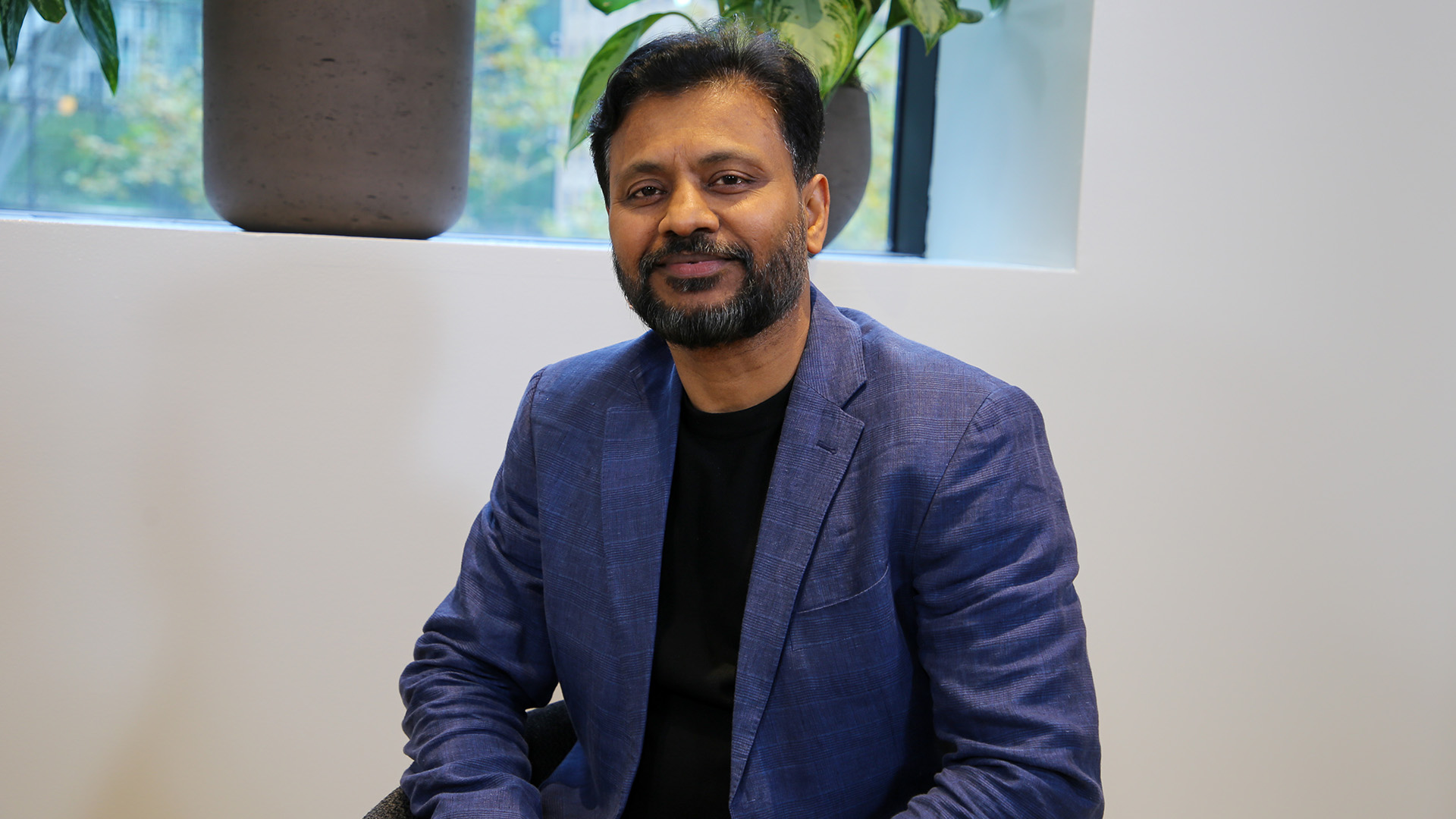
Standardizing middleware, defining service ownership and enforcing identity across APIs is increasingly viewed as a prerequisite for an industry-wide shift, according to Rishi Singh (pictured), vice president and head of cloud and custom applications practice, North Americas, at Capgemini Financial Services.

Capgemini’s Rishi Singh talks with theCUBE about API governance.
“A lot of [enterprises] are trying to modernize that whole space. Now with AI coming into the fold [as well as] agentic AI, they want to get that whole middleware layer correct, because anything which they can even want to do in terms of agentic AI, the underlying API should be very well structured, well formed and well defined,” Singh said.
Singh spoke with theCUBE Research’s Paul Nashawaty at the Kong API Summit: The API Summit for the Agentic Era, during an exclusive broadcast on theCUBE, SiliconANGLE Media’s livestreaming studio. They discussed rationalizing heritage integration stacks, aligning catalogs with business capabilities and API governance. (* Disclosure below.)
Many large enterprises still lack a clear inventory of services mapped to business capabilities, which complicates discovery, reuse and control. This gap becomes riskier when introducing agentic patterns that depend on dependable interfaces and clear ownership, according to Singh.
“Right now, if you go to any large enterprise and you say, ‘Do you have a catalog which can define all of your business capabilities? And what are the underlying services they’re running on?’ I think 90% of the answer would be no,” he said. “I believe they should certainly invest in rationalizing all of that, because the moment you bring in agentic AI, that problem is going to compound.”
Readiness of emerging standards is another concern for teams planning production timelines. Some components, including Model Context Protocol, require additional security hardening before broad deployment, according to Singh.
“The MCP itself, while it is open source and there’s a lot of traction in terms of how you can use it, its production is not there yet,” he said. “There’s a lot of security gaps or vulnerabilities around this.”
Even so, organizations can make incremental progress while the ecosystem matures. One approach is to pair MCP with compensating tools and controls to validate narrow workflows before scaling, Singh explained.
“Right now you can make use of MCP along with third-party tools to address the vulnerability gap and you can still come up with actual workflows — which [are] production-ready — but they have to invest time in doing that,” he said.
Here’s the complete video interview, part of SiliconANGLE’s and theCUBE’s coverage of the Kong API Summit event:
(* Disclosure: TheCUBE is a paid media partner for the Kong API Summit. Neither Kong, the sponsor of theCUBE’s event coverage, nor other sponsors have editorial control over content on theCUBE or SiliconANGLE.)
Support our mission to keep content open and free by engaging with theCUBE community. Join theCUBE’s Alumni Trust Network, where technology leaders connect, share intelligence and create opportunities.
Founded by tech visionaries John Furrier and Dave Vellante, SiliconANGLE Media has built a dynamic ecosystem of industry-leading digital media brands that reach 15+ million elite tech professionals. Our new proprietary theCUBE AI Video Cloud is breaking ground in audience interaction, leveraging theCUBEai.com neural network to help technology companies make data-driven decisions and stay at the forefront of industry conversations.