



 AI
AI
AI
AI

AI

The race to scale artificial intelligence is redefining how enterprises think about control, compliance and trust — and data sovereignty has emerged as the foundation for keeping innovation grounded.
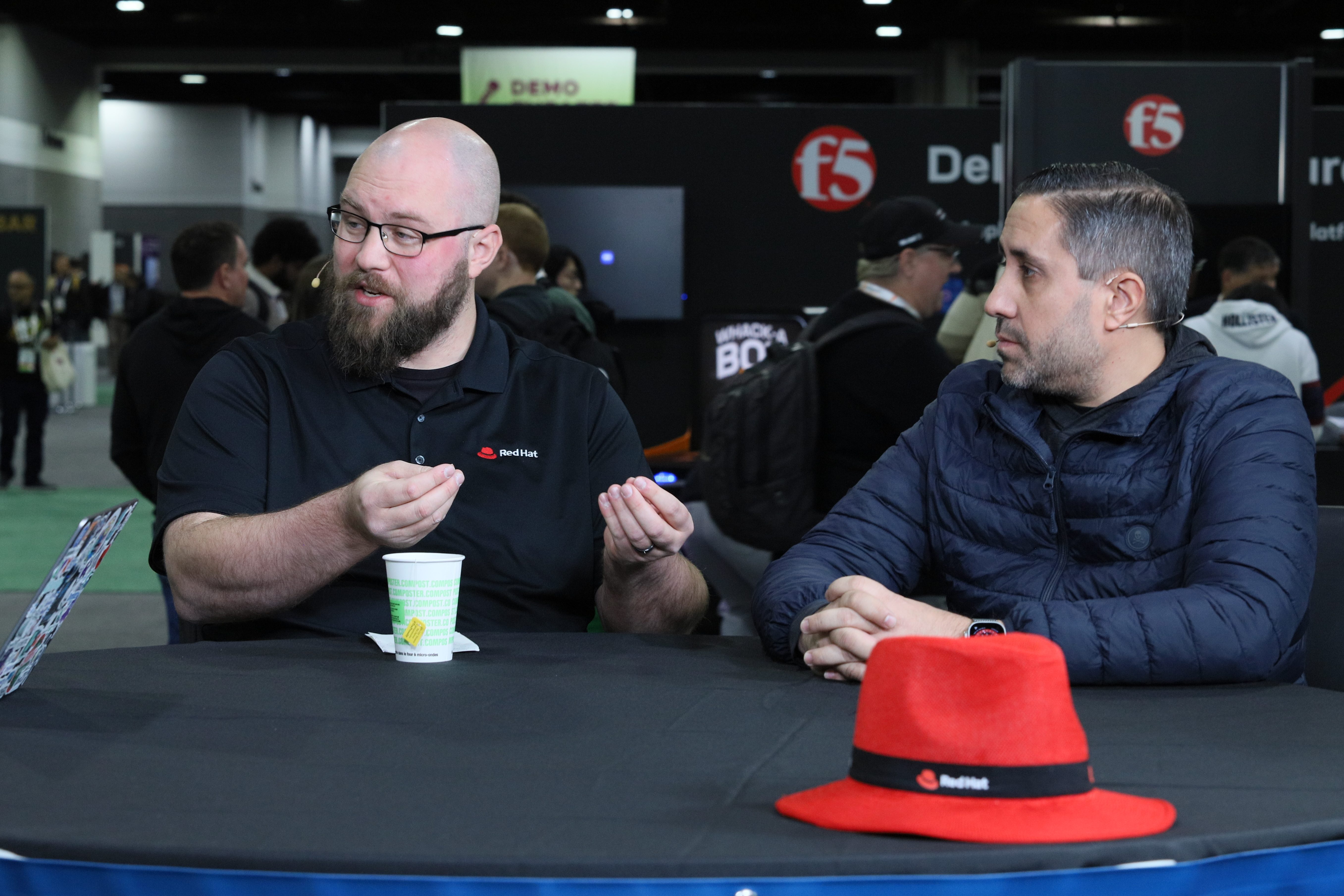
Across industries, organizations are rebalancing where data lives and how it moves. Security, governance and regional compliance now shape every infrastructure choice. Red Hat Inc.’s latest OpenShift updates spotlight this convergence, blending AI workloads with cloud-native control. That balance between innovation and assurance is increasingly seen as the true test of enterprise maturity, according to Jimmy Alvarez (pictured, right), senior principal product marketing manager at Red Hat.
Red Hat’s Jimmy Alvarez discuss how Red Hat is strengthening AI infrastructure through OpenShift.
“We own the full stack end-to-end, right from the platform to the containers, to the networking,” Alvarez said. “Everything in between, like the GitHub and deploying applications, all of that makes it to where … it’s a nice transition.”
Alvarez and Shane Utt (left), senior principal software engineer at Red Hat, spoke with theCUBE’s Rob Strechay at the KubeCon + CloudNativeCon NA event, during an exclusive broadcast on theCUBE, SiliconANGLE Media’s livestreaming studio. They discussed how Red Hat is strengthening AI infrastructure through OpenShift, focusing on data sovereignty, security and trusted enterprise control. (* Disclosure below.)
AI is no longer an experiment; it’s a production workload that demands transparency and control. Red Hat’s approach to data sovereignty is designed to ensure that AI innovation doesn’t come at the expense of security or compliance. The company’s full-stack strategy provides consistent governance whether workloads run on-premises or across clouds, Alvarez explained.
“The biggest thing with AI … it’s actually evolving into more agentic AI, all these MCP servers,” he said. “Enhancing all and going down that path, that’s where we see a lot of our customers go now. They’re ready to bring those workloads from development where [they] have a couple of developers playing with a couple LLMs to more like llm-ds, MCP servers, all those things.”
Security remains the undercurrent of every AI conversation. From the rise of agentic frameworks to the growth of context-aware systems, the company sees proactive defense as essential to operational success. Red Hat’s engineers are preparing for what comes next, from post-quantum cryptography to agent-level guardrails, according to Utt.
“Security is perennial — it’s the job that’s never done,” he noted. “We’re pretty convinced that quantum is going to happen in the next five plus years. We’re doing PQC, post-quantum cryptography, across the entire stack.”
That forward stance reflects how enterprise AI and infrastructure are converging. Red Hat is rethinking where intelligence should reside, bringing new logic into Model Context Protocol servers — the first line of defense against rogue agent behavior.
“The MCP server should be intelligent enough to know when a destructive action is happening,” Utt said. “We’re building with defense in-depth strategies in mind … in addition to doing guardrails at the normal level, which is like the agent level and that stuff works experimenting with right now is like guardrails at that level to protect the prompts.”
As workloads evolve, Red Hat sees data control as a differentiator. The company’s leadership in OpenShift AI underscores a growing belief that enterprise-grade platforms must support every layer — from virtual machines to containers — while keeping data sovereign across regions and use cases, Alvarez emphasized.
“We’re starting to see that also in the U.S. with some defense contractors and things of that nature,” he said. “AI, security and data sovereignty — that’s what we’re looking forward to in 2026, enhancing that.”
Here’s the complete video interview, part of SiliconANGLE’s and theCUBE’s coverage of the KubeCon + CloudNativeCon NA event:
(* Disclosure: Red Hat sponsored this segment of theCUBE. Neither Red Hat nor other sponsors have editorial control over content on theCUBE or SiliconANGLE.)
Support our mission to keep content open and free by engaging with theCUBE community. Join theCUBE’s Alumni Trust Network, where technology leaders connect, share intelligence and create opportunities.
Founded by tech visionaries John Furrier and Dave Vellante, SiliconANGLE Media has built a dynamic ecosystem of industry-leading digital media brands that reach 15+ million elite tech professionals. Our new proprietary theCUBE AI Video Cloud is breaking ground in audience interaction, leveraging theCUBEai.com neural network to help technology companies make data-driven decisions and stay at the forefront of industry conversations.