





 AI
AI
AI
AI

AI

The modernization mandate is clear: Enterprise IT can no longer wait. Disruptive workloads and brittle legacy systems are forcing companies to act fast, with many now searching for tools that can support a next-generation AI architecture and redefine the data center.
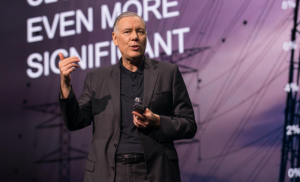
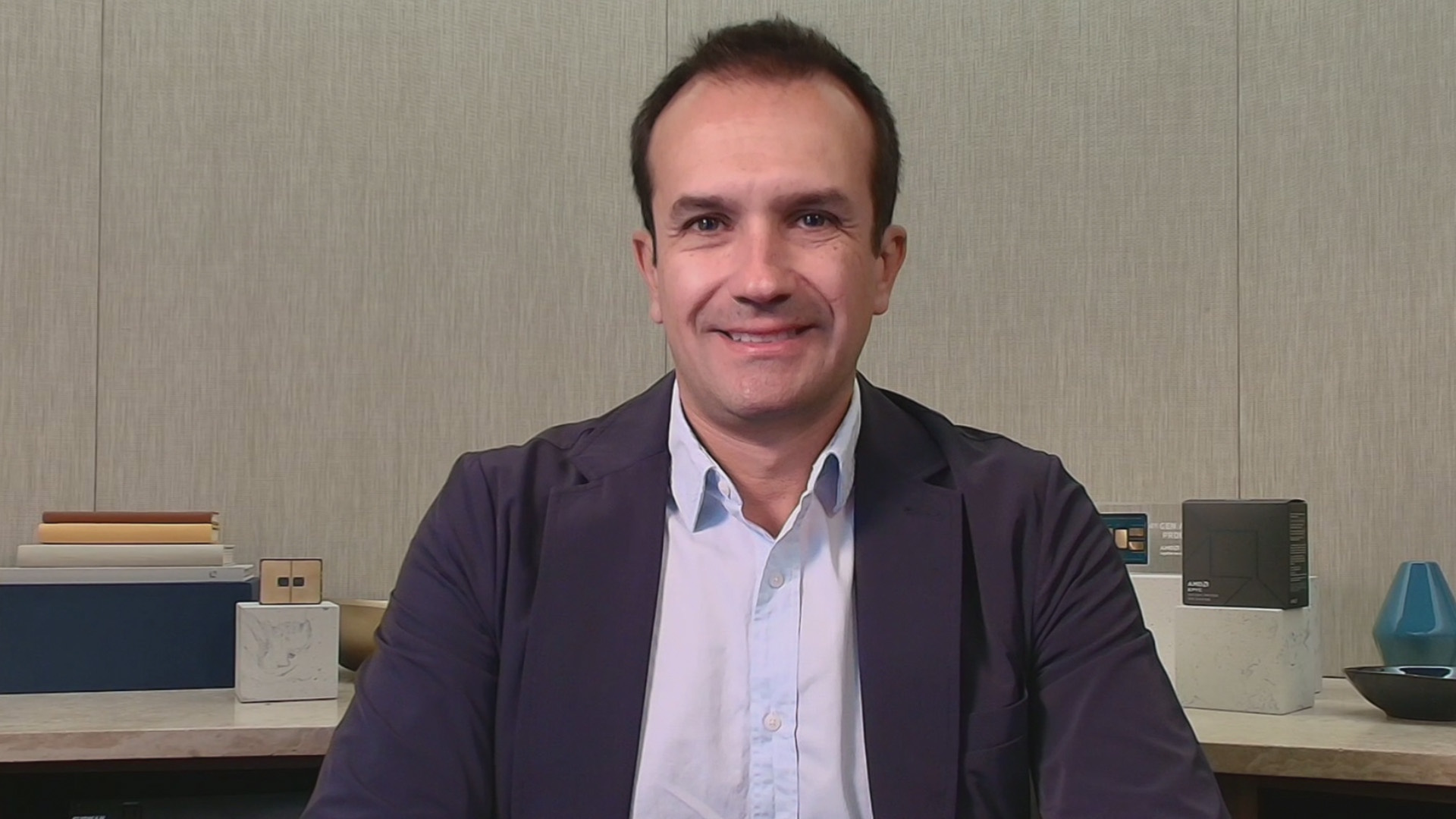
The nearly 20-year alliance between Dell Technologies Inc. and Advanced Micro Devices Inc. has become a key architectural answer to this shift. Once foundational, the partnership now centers on next-generation AI architecture and private cloud strategy — areas where modernization is no longer optional. The stakes are binary, according to Juan Martinez (pictured), senior director of OEM/ODM enterprise and HPC at AMD.
TheCUBE Research’s Rob Strechay talks about the Dell and AMD partnership during the “5 Steps to a Smarter Private Cloud” event.
“Our customers, regardless of the industry … are facing two potential outcomes,” Martinez told theCUBE. “One outcome is [to] be a disruptor in their industry, which will be great for them, or be disrupted by someone else.”
Dell and AMD’s shared focus on efficiency and cost resonates with enterprise buyers. Their integrated approach offers a stable alternative to unpredictable public cloud expenses and tackles core pain points, according to Rob Strechay, principal analyst at theCUBE.
“I think that one of the things that’s really interesting is … that not only helps from a density perspective, power and cooling, but also licensing costs when you’re looking at software that are licensed that way,” Strechay said during the recent “5 Steps to a Smarter Private Cloud” event. “We see it from the … organizations we talk to on a daily basis.”
This feature is part of SiliconANGLE Media’s ongoing exploration into enterprise modernization and next-generation infrastructure ecosystems. (* Disclosure below.)
While AI’s growing influence drives enterprise modernization, Dell and AMD’s real-world impact is already visible in the budget. Their joint solutions are delivering measurable cost relief to IT teams today. Dell’s broader approach to silicon optionality — offering customers a choice between AMD, Intel Corp. and Nvidia Corp. — allows organizations to match the right performance and price-per-watt profile to each unique workload, according to theCUBE’s Dave Vellante.
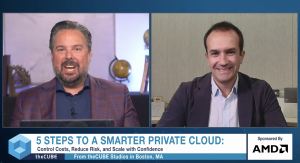
AMD’s Juan Martinez talks with theCUBE about the AMD-Dell partnership.
The joint engineering between Dell PowerEdge and AMD’s EPYC processor line is designed to tackle two major pressures: rising AI compute demands and the need to extend the value of existing infrastructure, thereby enabling the next-generation AI architecture, according to Martinez. The strategy is especially effective in virtualized environments, where maximizing server output is key to reducing overall infrastructure sprawl.
“When we look into what we are offering between Dell PowerEdge and our AMD EPYC portfolio, basically we are getting that customers are able to run a larger number of virtual machines per server versus what they used to do in the past,” Martinez told theCUBE. “They are able to get up to 192 cores of performance, high memory bandwidth, and on top of that, we are able to bring a comprehensive path for migration.”
This emphasis on efficiency isn’t just theory. Dell and AMD currently hold two world records for VMware performance per socket, highlighting their ability to drive greater density, smarter power management and stronger cost efficiency, according to Martinez. Early customer results back it up: Some have reduced hardware usage by as much as 90%, unlocking the budgetary freedom to focus more on innovation.
“AMD EPYC is basically putting all the higher core count, the high memory bandwidth, and that is putting all the comprehensive path to manage all the transition in a way that is making sense from a technical standpoint and AMD standpoint,” Martinez said. “We’re working with Dell very actively to have co-engineering tools that help them to have a comprehensive path to maximize their private clouds and the solutions that they’re running in those private clouds.”
As AI workloads become more varied and distributed, system designers are shifting away from monolithic architectures toward balanced, co-engineered infrastructure to support next-generation AI architecture. Dell and AMD’s collaborative approach to building PowerEdge systems with AMD’s Turin family tailors configurations to support AI deployments of all sizes — not just the largest hyperscale use cases, according to David Schmidt, senior director of PowerEdge product management at Dell, and Derek Dicker, corporate vice president, enterprise and HPC business groups at AMD.

Dell’s Alyson Langon and Alison Briers talk with theCUBE about the Dell and AMD partnership.
“When we sat down and first started discussing Turin with AMD, we recognized that there’s different sizes for different parts of customer journeys, what they need to deploy in their data center,” Schmidt told theCUBE. ”We looked at how AMD was laying out Turin, the Turin stack from top to bottom, and we really challenged each other on what we needed to provide. We were bringing system design ideas to the table of serving customers that need eight cores, 16 cores. It’s not all about the highest core counts possible; it’s about providing the right range.”
As hardware density and core counts increase, the pressure on power and cooling infrastructure becomes a key design constraint. This demand is driving a shift back to on-premises control, with customers seeking to avoid high variable costs and gain predictable total cost of ownership, according to Alyson Langon, director of product marketing at Dell, and Alison Biers, global marketing senior director for server, networking and vertical industries at Dell.
“[Customers] need predictable [total cost of ownership] so that they can have better budget control,” Briers told theCUBE. “They also want to avoid vendor lock-in with a modular, open infrastructure that can provide that ease of portability, as well as flexibility, and they really want to keep control of their data. They need to keep that data local and secure for stronger compliance and security … they need visibility to the future costs, and they want to … have that across their organization, whether it comes from departments within their organizations or from IT.”
Together, Dell and AMD are proving that modernization isn’t just about new technology — it’s about giving enterprises the architectural freedom to innovate at their own pace, according to Strechay.
(* Disclosure: TheCUBE was a paid media partner for the “5 Steps to a Smarter Private Cloud” event. Neither Dell, the sponsor of theCUBE’s event coverage, nor other sponsors have editorial control over content on theCUBE or SiliconANGLE.)
Support our mission to keep content open and free by engaging with theCUBE community. Join theCUBE’s Alumni Trust Network, where technology leaders connect, share intelligence and create opportunities.
Founded by tech visionaries John Furrier and Dave Vellante, SiliconANGLE Media has built a dynamic ecosystem of industry-leading digital media brands that reach 15+ million elite tech professionals. Our new proprietary theCUBE AI Video Cloud is breaking ground in audience interaction, leveraging theCUBEai.com neural network to help technology companies make data-driven decisions and stay at the forefront of industry conversations.