







 EMERGING TECH
EMERGING TECH
EMERGING TECH
EMERGING TECH

IBM Corp. today announced two new quantum processors at its annual Quantum Developer Conference that are aimed at delivering scalable quantum computation capabilities next year and fault-tolerant quantum computing by 2029.
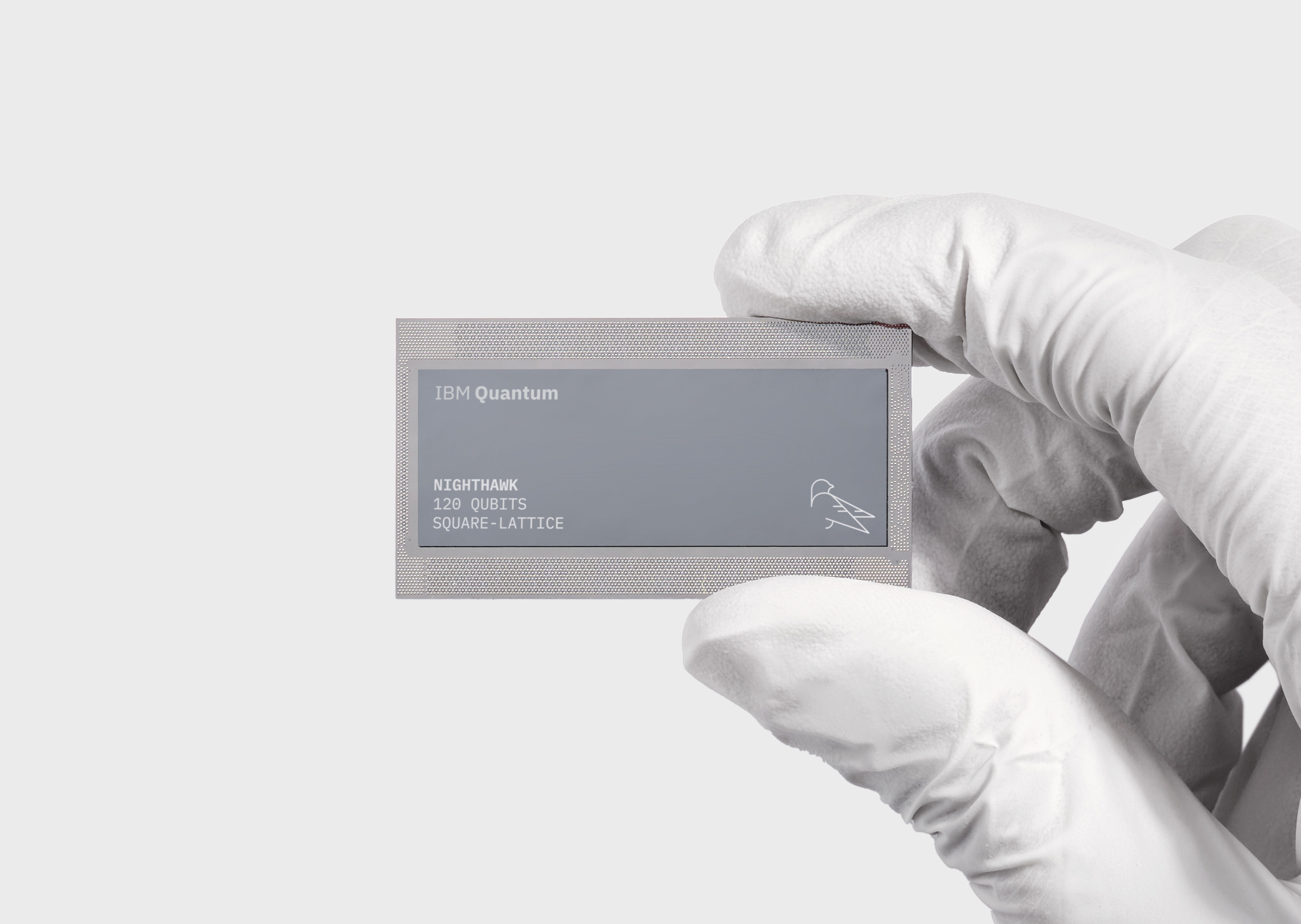
The company unveiled Quantum Nighthawk, a 120-qubit processor designed with 218 next-generation tunable couplers that expands on the previous generation Heron processor’s capabilities with 20% more couplers. According to the company, the increased connectivity between qubits allows users to execute circuits with 30% more complexity, while maintaining low error rates.
Qubits are the fundamental unit of logical information in a quantum computer, similar to a classical computer’s bit. Unlike classical bits, which can be a 0 or 1, qubits can be 0, 1 or a “superposition” of both at the same time. Using this property, quantum processors such as IBM’s Nighthawk can do complex parallel calculations.
Tunable couplers push this even further by allowing pairs of qubits to interact with one another, thus enabling entanglement. Entanglement is useful because it allows a single computer operation to affect multiple quantum states across qubits at the same time, this allows quantum computers to explore many potential solutions in at the same time.
IBM said Nighthawk’s architecture will enable programmers to explore demanding problems that require up to 5,000 two-qubit gates. The company expects that future iterations of the processor will provide 7,500 gates by the end of 2026 and 15,000 gates by 2028.
With this new chip, IBM is working on a path toward what is called “quantum advantage,” or when a quantum computer proves that it can perform a specific computation that would be impossible or impractical for powerful classical computers. The goal is to prove that quantum computers can move beyond theoretical advantage on niche problems and begin to solve useful real-world problems faster than any traditional computer can.
The objective is to confirm the first cases of verified quantum advantage by the wider community by the end of 2026. To support that, IBM created a public tracker that will monitor and verify emerging demonstrations of quantum computers succeeding at classically hard problems. IBM, Algorithmiq Inc., BlueQubit Inc. and the Flatiron Institute are contributing to the tracker.
“The model we designed explores regimes so complex that it challenges all state-of-the-art classical methods tested so far,” said Algorithmiq Chief Executive and co-founder Sabrina Maniscalco. “These are only the first steps — quantum advantage will take time to verify, and the tracker will let everyone follow that journey.”
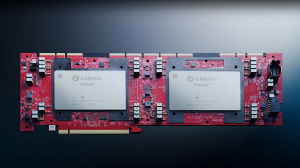
The company also announced Quantum Loon, an experimental processor that demonstrates all of the components needed to approach extremely low error rates and high-efficiency recovery from errors.
Although quantum computers are powerful and capable of solving complex problems at high speed, qubits themselves are extremely fragile and disrupted by the most minor fluctuations in their environment.
IBM said Loon validates a new architecture that allows for practical, high-efficiency quantum error correction. This feature allows quantum computers to run at high speeds while handling the inevitable errors caused by errant changes in magnetism, heat or other random fluctuations.
One breakthrough feature is the incorporation of multiple, high-quality low-loss routing layers that allow the entanglement beyond nearest-neighbor and physically link distant qubits on the same chip. The company also demonstrated technologies to reset qubits between computations.
Combined with classical computer hardware designed by IBM to accurately decode errors in real-time, less than 480 nanoseconds, Loon provides the necessary foundation for scaling quantum fault-tolerance at high speed.
To support the scale of its upcoming quantum computers, IBM announced the primary fabrication of the wafers at the Albany NanoTech Complex advanced 300mm chip fabrication facility in New York.
Loon and Nighthawk represent milestones along IBM’s roadmap to deliver a large-scale, fault-tolerant quantum computer platform by 2029.
Support our mission to keep content open and free by engaging with theCUBE community. Join theCUBE’s Alumni Trust Network, where technology leaders connect, share intelligence and create opportunities.
Founded by tech visionaries John Furrier and Dave Vellante, SiliconANGLE Media has built a dynamic ecosystem of industry-leading digital media brands that reach 15+ million elite tech professionals. Our new proprietary theCUBE AI Video Cloud is breaking ground in audience interaction, leveraging theCUBEai.com neural network to help technology companies make data-driven decisions and stay at the forefront of industry conversations.