






 CLOUD
CLOUD
CLOUD
CLOUD

CLOUD

There’s been much talk in recent months around the software supply chain, which is vulnerable to various attacks. It’s been a significant focus for companies as they’ve sought to secure the upper hand.
But what about the media supply chain? How can companies drive its media content to the cloud efficiently?
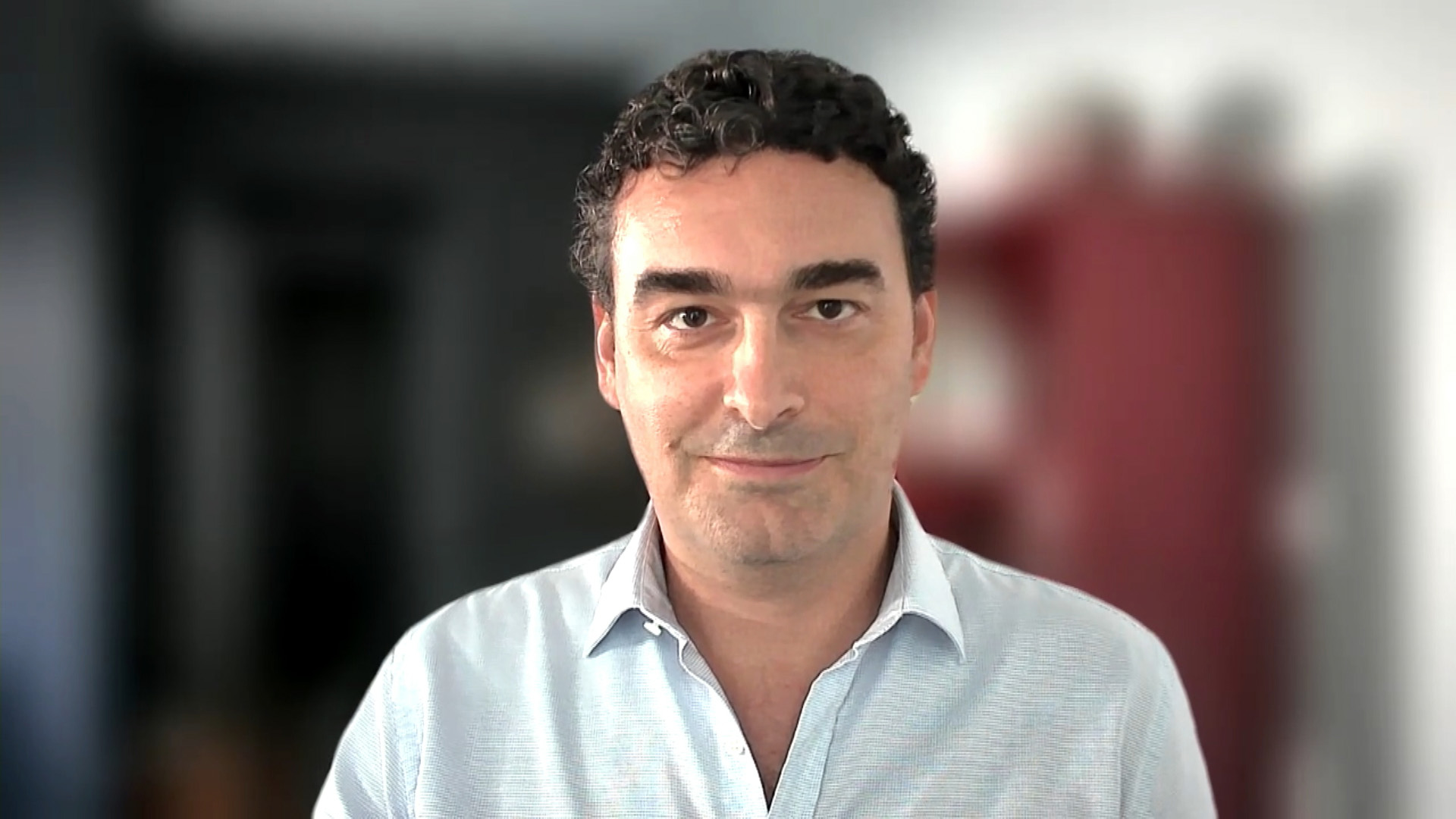
What’s happening today is people are trying to find out how to leverage cloud while looking for over-the-top services, direct-to-consumer services and free, ad-supported television, according to Benjamin Desbois (pictured), chief revenue officer of Telestream LLC.
“The idea is how can you leverage the cloud, the burst capacity but also fully cloud-native solutions to optimize your whole supply chain,” Desbois said. “We’ve been trying over the years to really optimize every single task, whether it was transcoding, content preparation, post-production at times, all the way from the ingest to the distribution.”
Desbois spoke with theCUBE industry analyst John Furrier at the “Optimize your Media Supply Chain and Increase Velocity with AWS” event, during an exclusive broadcast on theCUBE, SiliconANGLE Media’s livestreaming studio. They discussed optimizing supply chains, the various tools available and what’s new in the space. (* Disclosure below.)
In today’s media environment, companies are looking for ways to optimize the entire supply chain to leverage all content and sell it to as many platforms as possible, according to Desbois. That could involve intelligent ingest — taking any feeds and camera content and moving it to the cloud to work with it there.
“Initially, what we’ve seen is people wanted a copy of the content in the cloud. Now, they’re reverting,” Desbois said. “What used to be the backup becomes a primary, because once it’s in the cloud, you can do a lot of things.”
That includes leveraging Amazon Rekognition to add more metadata and then feeding it into one’s distribution instead.
“What you also can do in the cloud is once you have all the orchestration and the content processing aspect, you can start really syncing glass to glass and end to end for your customers, trying to leverage that digitization of the entire portfolio and the entire workflow to make it more efficient,” Desbois said.
Telestream’s partnership with AWS has helped enable the migrations of certain workloads to the cloud.
“Some of these media [are quite] old, so we turn it back into something that’s usable today and help facilitate the distribution of that into their different content management systems,” Desbois said.
Earlier this year, Telestream unveiled a content manager system, which it said would leverage cloud and on-premises storage for post-production and a software-only version of its Lightspeed Live Capture solution, which provides cloud-native video quality monitoring. What comes next for the company, especially given the explosion of artificial intelligence, and how might some under-the-hood capabilities scale or change?
There’s no question that AI and machine learning will “revolutionize” the content management aspect, according to Desbois.
“People have really focused on the hybrid environment into optimizing costs,” he said. “Now you have the ability to do cost tracking and optimizing.”
AI can also be utilized in the archiving world, so if someone is no longer around to provide access, companies can still anticipate that and start retrieving content. The capabilities in the cloud that people can leverage during live production are going to be a big part of what comes next, according to Desbois.
“Moving away from just the truck, but getting the truck as an input into the cloud and then optimizing the live production workflow, I think is the next stage,” he said.
What does all of this mean, in Desbois’ view? In short, more producers will be empowered to produce more content, and not just at the tier-one level.
“If you start combining the ingest capabilities, the quality monitoring of contribution feeds, the advanced options of connection with the post-production tools that you need at the distribution end, you can have a full chain,” he said. “We have [integration] with a lot of the key players as well on the distribution side to be able to fully enable a lot of people to leverage a cloud to build their own and become their own broadcasters.”
Here’s the complete video interview, part of SiliconANGLE’s and theCUBE’s coverage of the “Optimize your Media Supply Chain and Increase Velocity with AWS” event:
(* Disclosure: Telestream Inc. sponsored this segment of theCUBE. Neither Telestream nor other sponsors have editorial control over content on theCUBE or SiliconANGLE.)
Support our mission to keep content open and free by engaging with theCUBE community. Join theCUBE’s Alumni Trust Network, where technology leaders connect, share intelligence and create opportunities.
Founded by tech visionaries John Furrier and Dave Vellante, SiliconANGLE Media has built a dynamic ecosystem of industry-leading digital media brands that reach 15+ million elite tech professionals. Our new proprietary theCUBE AI Video Cloud is breaking ground in audience interaction, leveraging theCUBEai.com neural network to help technology companies make data-driven decisions and stay at the forefront of industry conversations.